OMS Transport • Passenger Counts

Stop Scrolling. Start Counting.

Passenger numbers shouldn’t live inside chat messages, notebooks or somebody’s memory. OMS gives transport teams structured passenger counts with instant totals, history and operational visibility.

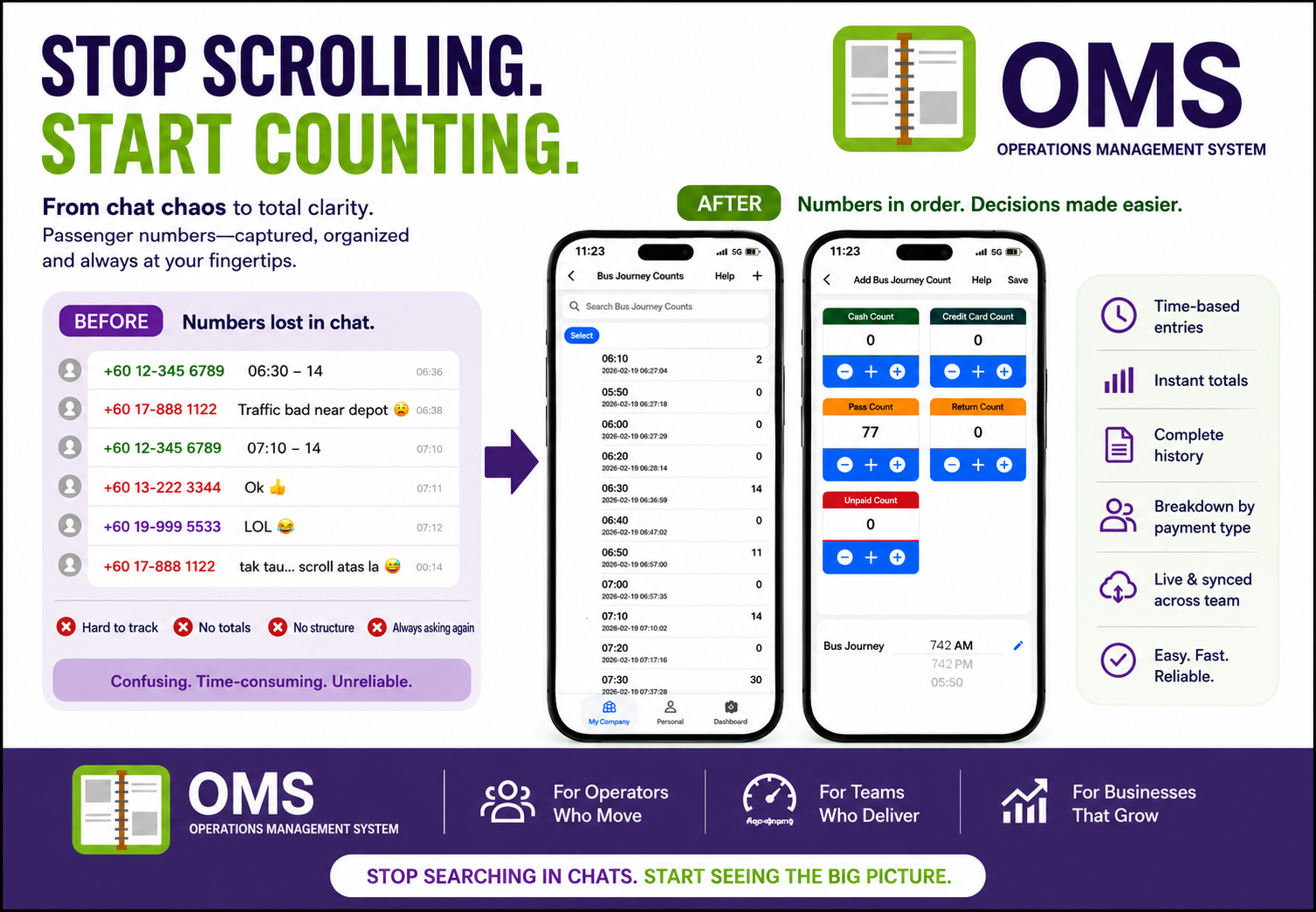
Chats Become Chaos

Passenger totals buried inside WhatsApp groups are difficult to track, easy to miss and frustrating to verify later.

No Clear Totals

Staff waste time manually adding numbers together, asking again or checking old messages.

No Operational History

When information disappears into chats, there’s no reliable historical operational record.

OMS Passenger Counts

Built Around Real Depot Workflows.

OMS Passenger Counts was designed for real operational use — not spreadsheets later in the day and not endless scrolling through chats. Staff can record counts quickly while operations are happening, with structured totals immediately available.

  • Time-based passenger entries
  • Separate cash, pass and card totals
  • Shared live operational visibility
  • Full historical records
  • Fast mobile-first workflow
  • Designed for busy transport operations
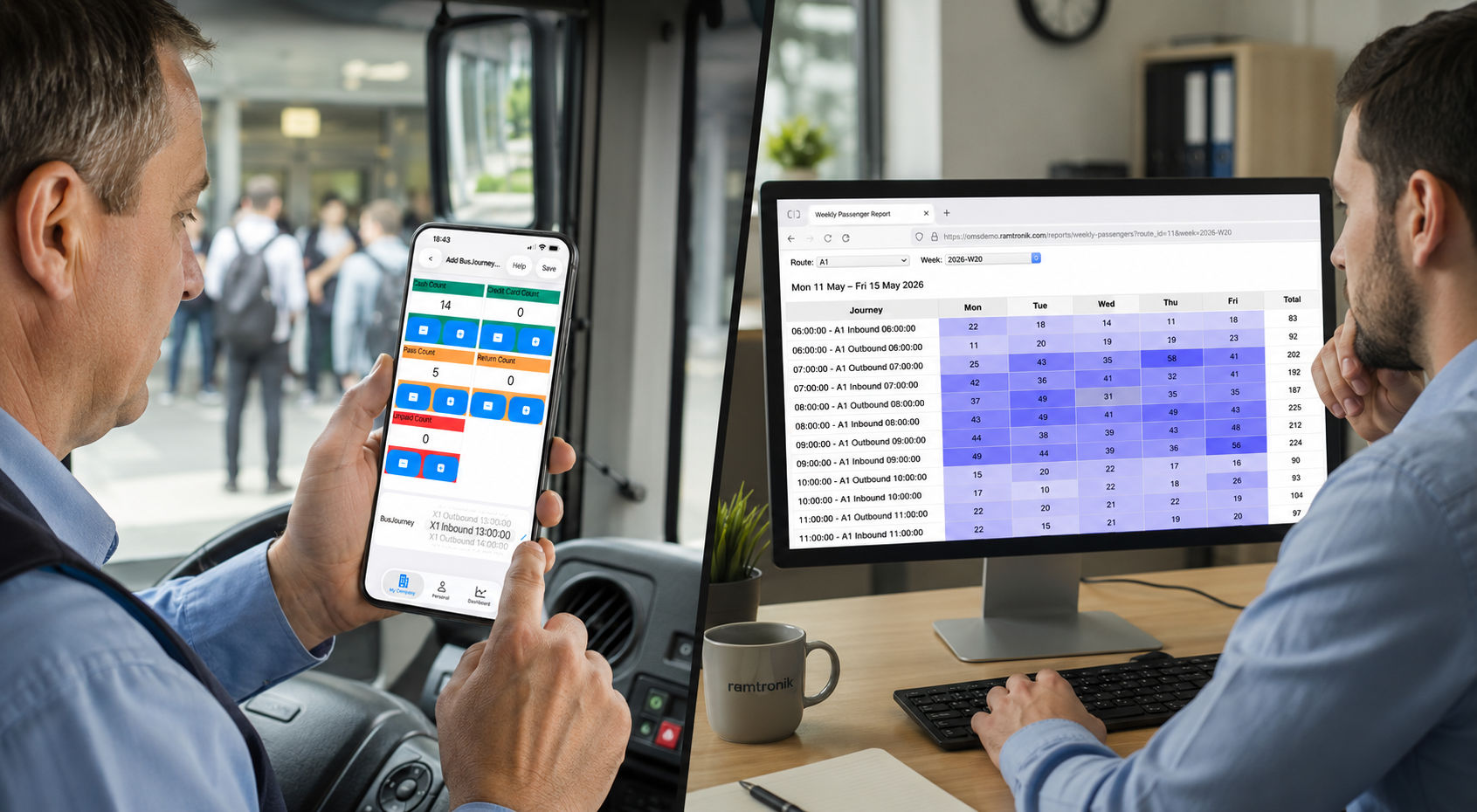
Passenger Counts Detail

Instant Visibility. Less Guesswork.

Managers and operational staff can immediately see current numbers, trends and breakdowns without chasing updates. Everyone works from the same operational information.

  • Reduce repetitive radio/chat traffic
  • Less confusion during busy periods
  • Improve operational reporting
  • Faster decision-making
  • Clearer communication across teams

Operational Information Should Be Structured.

OMS turns scattered operational messages into usable, searchable and shareable operational data.

Live

Shared visibility across depot teams while operations are happening.

Fast

Built for quick operational entry under real transport conditions.

Clear

Structured totals and historical records without chat chaos.

Built From Real Operational Frustrations.

OMS Passenger Counts exists because scrolling through chats looking for numbers is not a system.

See OMS in Action